
Last Updated on November 21, 2026
GrapheneOS vs Google
I am less interested in having the latest phone than really knowing what it is actually doing behind the scenes. Modern smartphones are incredibly useful, but they are also personal computers packed with accounts, location information, messages and applications. I’m not a big fan of most personal info based mobile apps and I hate when I have to use banking and financial apps. although this seems to be increasingly forced upon us.
That is why the latest dispute involving GrapheneOS and Google caught my attention. It is not just a trivial, commercial argument between software developers. It raises a question that affects all of us: how much freedom should we have to change the software on a device we own?
What makes GrapheneOS different?
GrapheneOS is a privacy- and security-focused operating system built on the Android Open Source Project. Unlike the Android experience supplied with most mainstream phones, it does not integrate the usual Google apps and services into the operating system by default. Hooray !!!
It also adds practical security controls. These include stronger exploit mitigations, additional restrictions around app permissions, a hardened browser called Vanadium, and options such as automatic reboot and separate user profiles.
Crucially, GrapheneOS is not simply ‘Android without Google’. Users can choose to install Google Play services in a sandboxed form if they need certain applications. That provides flexibility, although using Google services can still involve sharing information with Google.
Nor does installing GrapheneOS make somebody anonymous. Privacy depends on what apps you use, which accounts you sign into and how you configure your device.
Why phone manufacturers matter
Historically, GrapheneOS’s officially supported phones have been Google Pixels. This can seem contradictory, but the project needs devices with robust security hardware, reliable firmware updates and support for properly verified installations. Nothing can be secure without being able to update quickly and easily – we’re living in the age of AI assisted hackers – nothing is safe without updates.
In March 2026, Motorola announced a long-term collaboration with the GrapheneOS Foundation. It has since confirmed that its new fqncy looking Signature 27 is built to support the operating system. It makes sense for them, instead of depending on one hardware supplier – Google. GrapheneOS could eventually be available on a phone from another established manufacturer.
However, the official compatibility announcement is not proof that a finished GrapheneOS build is available for customers to install today, or that every phone comes with it preloaded. although I have seen fairly reliable that this should be available from about the middle of January, 2027 possibly earlier.
The allegations against Google
On 19 November, GrapheneOS publicly accused Google of approaching phone manufacturers and using Google Mobile Services licensing terms to discourage them from supporting the project. The developers also criticised Google’s increasing use of Pixel-exclusive features. These claims are worth reporting, but they remain allegations. Public reporting has not independently established the alleged threats, and the project has not publicly identified an affected manufacturer in the sources reviewed for this article.
For anyone unfamiliar with the term, the bootloader controls the process of starting a phone. Being able to unlock it is often necessary when installing a different operating system. The goal for a secure installation is then to restore appropriate boot verification, rather than leave the device permanently unprotected.
Why this is bigger than GrapheneOS
Google’s influence over Android has been challenged before. In July 2026, the Court of Justice of the European Union upheld a roughly €4.1 billion penalty concerning Google’s historical Android agreements, including restrictions that limited markets for alternative Android versions. 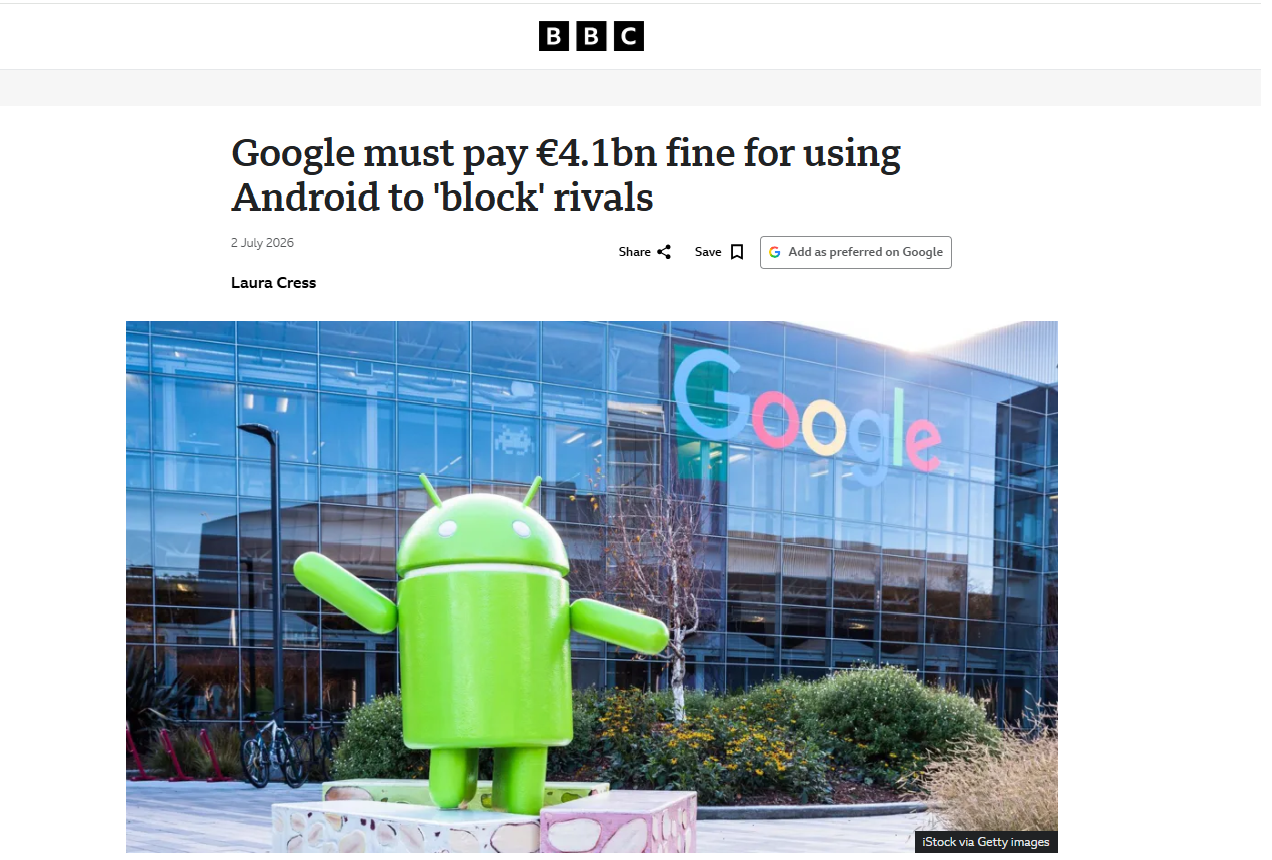
That judgment does not establish wrongdoing in this latest dispute. But it does underline the distinction between Android’s open-source code and the commercial terms surrounding essential services.
I also think it is worth separating Google’s engineers from its business policies. GrapheneOS itself has acknowledged assistance from Google engineers with features including passkeys and FIDO2 support.
Choice matters even if you never switch
Most people will continue to use the operating system that arrived on their phone. That is completely reasonable. A secure, regularly updated mainstream device is often the sensible choice.
But alternatives are valuable. They let people decide how tightly their phones integrate with large online platforms and create room for different security priorities.
For me, that is the real issue: not whether everybody should install GrapheneOS, but whether manufacturers and phone owners should have the freedom to support it if they want to.
