
Last Updated on May 12, 2026
EU Age Verification Debate Expands To VPNs
European legal advisors and policy researchers are now openly discussing VPNs as a potential weakness in online age verification systems.
The basic issue is simple: many age verification rules rely on where a user appears to be located. But a VPN can make someone appear to be connecting from a different country, potentially bypassing regional restrictions altogether.
That does not mean the EU has announced a VPN ban. It has not. But the language around VPNs, privacy tools and “circumvention” is beginning to change. You can watch this age verification video on youtube too.
Why VPNs Matter to Age Verification
Online age verification systems are increasingly being introduced across Europe and other parts of the world. These systems are usually designed to prevent minors accessing certain types of online content or services.
But enforcement often depends on geography. A website may apply one set of rules to users in the UK, another to users in France, and another to users somewhere else entirely.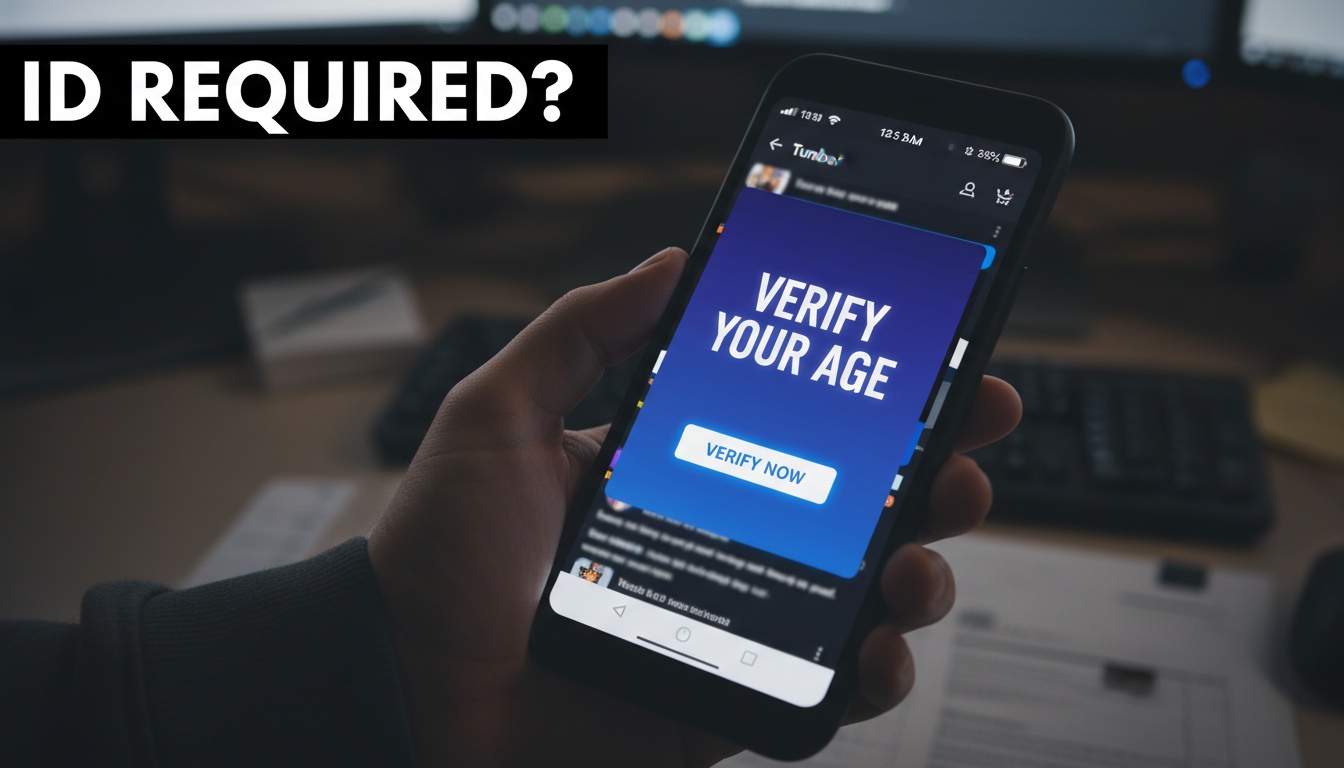
A VPN complicates that model because it can route a user’s internet connection through another country. From the website’s point of view, the user may no longer appear to be in the country where the age check is required.
The European Parliament Research Angle
A recent article from Heise reported that EU legal advisors have raised concerns about VPNs being used to bypass age verification measures. The report refers to work linked to the European Parliamentary Research Service, which has discussed VPNs in the context of protecting children online.
This is significant because the concern is no longer only coming from campaigners, journalists or social media commentators. It is now appearing in official policy research discussions.
That shifts the debate. VPNs are not just being described as privacy tools. They are increasingly being discussed as possible tools of circumvention.
Privacy Tool or Loophole?
VPNs are widely used for legitimate purposes. People use them for privacy, remote work, public Wi-Fi security, journalism, travel, and protection against network surveillance.
But the same technology can also be used to avoid regional restrictions. That creates a difficult policy problem.
If governments want age verification to be effective, they may eventually ask whether platforms should detect or block VPN usage. But if platforms begin blocking VPN users, ordinary privacy-conscious users may be affected as well.
 Why This Could Escalate

The wider concern is that age verification may gradually move beyond individual websites.
Recent debates have already touched on app stores, operating systems, device-level age signals, digital identity systems and now VPNs. That suggests the enforcement debate is moving deeper into the internet’s infrastructure.
Once regulators focus on circumvention, the question changes. It is no longer just “how should websites verify age?” It becomes “how do governments stop people bypassing the system?”
No EU VPN Ban — But a Clear Shift in Tone
There is currently no verified EU proposal to ban VPNs. That distinction matters.
However, official concern about VPN circumvention is now visible. The language around VPNs is changing from privacy and security toward loopholes, evasion and enforcement problems.
For anyone interested in online privacy, this is worth watching closely.
Sources and Further Reading
- Heise: Age verification — EU legal advisors warn of circumvention option via VPNs
- European Parliamentary Research Service: Virtual private networks and the protection of children online
- European Commission: EU age verification solution FAQ
- European Commission: European age verification app announcement
- Tom’s Hardware: EU research arm labels VPNs a loophole
