
Last Updated on September 19, 2026
NymVPN: The VPN That Doesn’t Just Hide Your IP
You’d have to say that VPNs are potentially one of the least evolved products in consumer software. Buy almost any of them and you get exactly the same architecture: a single company runs a set of servers, you route your traffic through one of them, and basically you’re asked to trust that company with everything you just hid from your ISP. Now it does work — but all you’ve really done is swap one point of trust for another.
Anyway this is a different product, something that is attempting to offer something genuinely different from the increasingly corporate feeling VPN market.
Here’s the quick NYM video review I did on the product after using it for a couple of weeks.
Click for NYM Free 7 Day Trial
(You have to use a tradional payment method for the free trial (i.e. not crypto or cash) but it works. Just add the payment method and cancel the subscription after you’ve started – the trial is genuine and will continue for 7 days – I did test this)
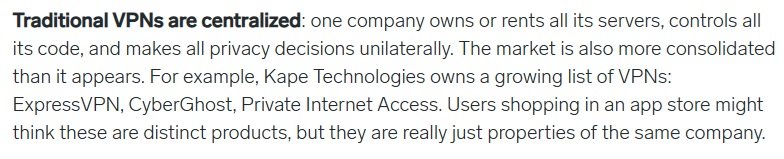
Now I think NymVPN is one of the few products trying to change that architecture rather than just the endless rebrands we normally see. It’s still a VPN in the practical sense — certainly masks your IP and encrypts your traffic in transit jsut as it should — but it’s built on a decentralized node network and pairs that with something far more interesting: a true mixnet mode.
I’ve been running it for a couple of weeks, and it’s the speed/privacy tradeoff that makes it worth talking about. If you want blazing speed it might not be your thing, but if privacy is your focus then it’s definitely worth considering.
What makes Nym structurally different
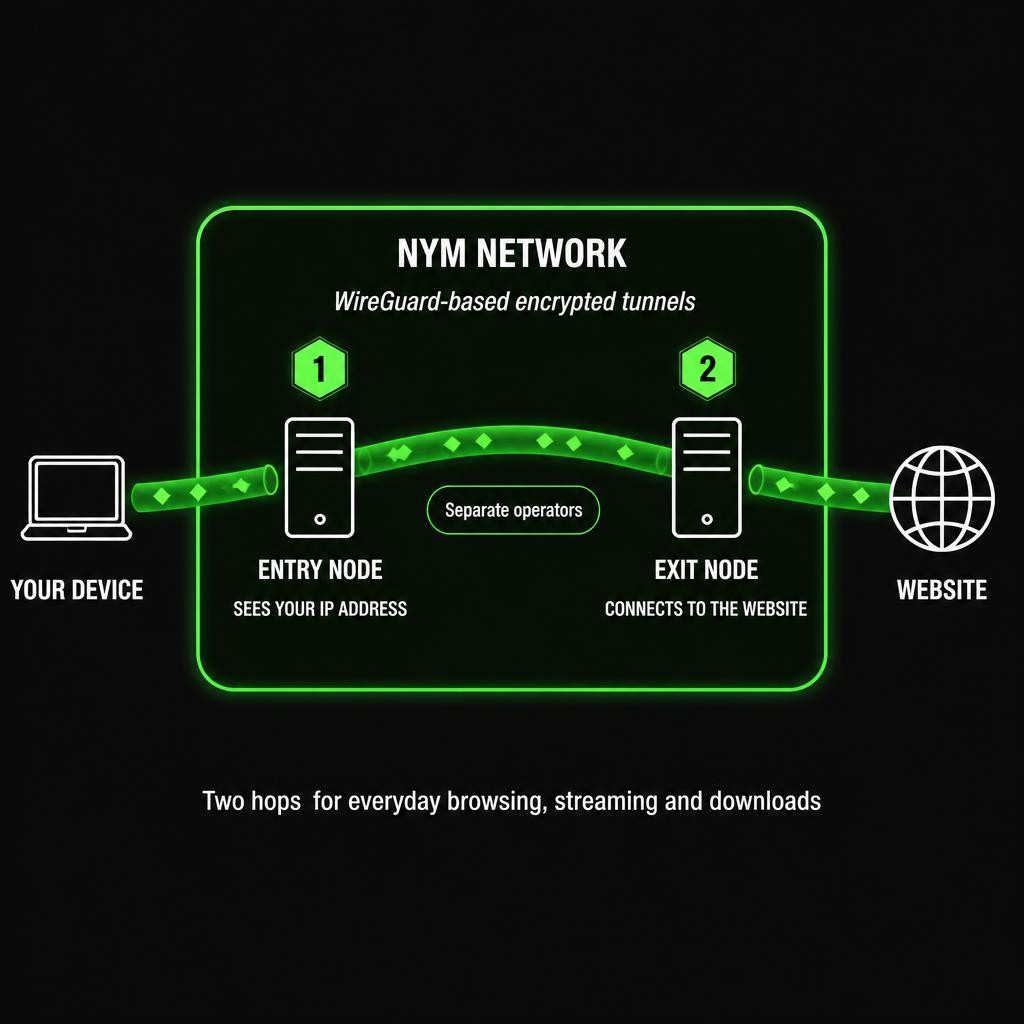
Now most “multi-hop” VPNs are still a single operator just running both hops. It’s really just a little extra sometimes the two servers are potentially sitting next to each other, that’s not anonymity. Nym’s fast mode splits trust across two completely independent nodes operated by third parties, so no single company sits across your whole path.
This is called fast mode and although it’s a significant privacy upgrade to the traditional VPN model, this is just the fast convenient mode. We’ve not got to the advanced stuff yet.
Fast mode — a two-hop decentralized path, WireGuard-style, tuned for everyday browsing and streaming. This is the every day mode – most people would use for normal day to day stuff.
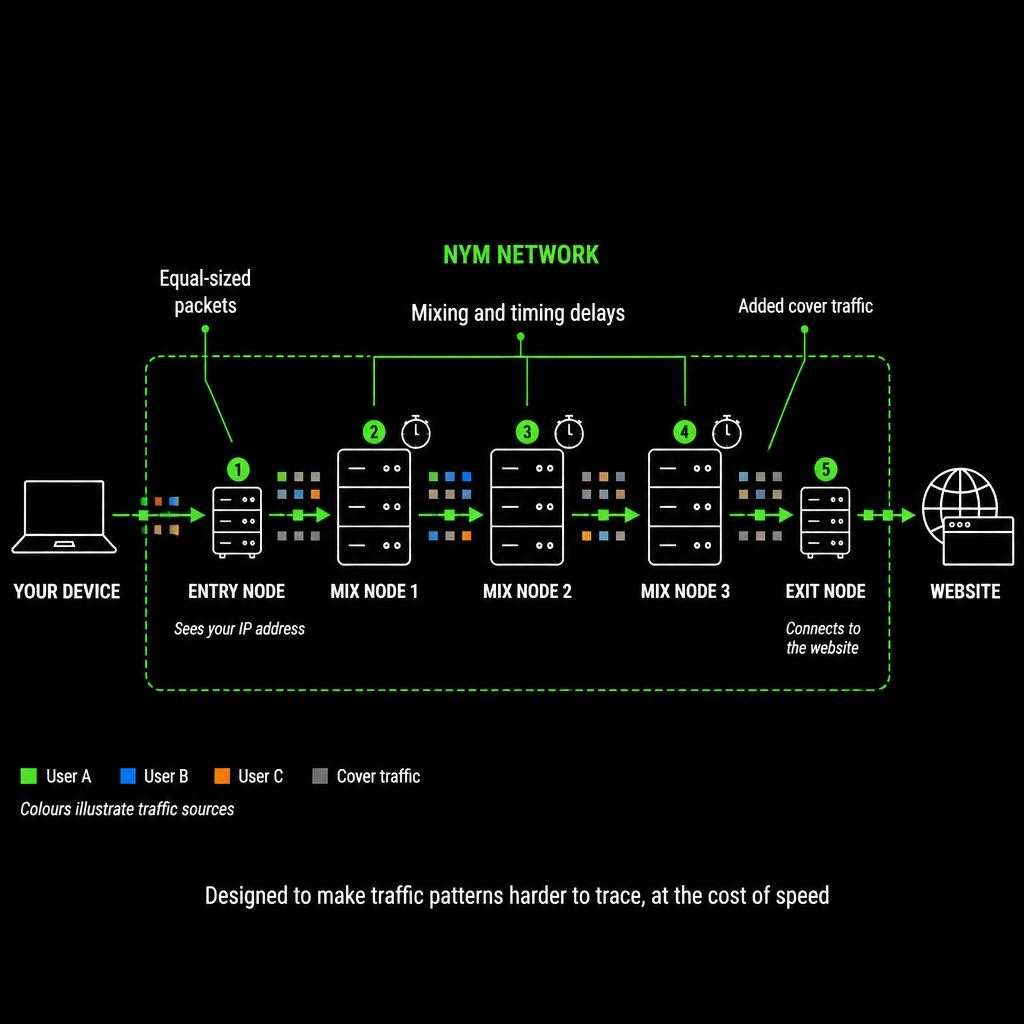
Anonymous mode — a five-hop mixnet that adds cover traffic, packet mixing and timing obfuscation.
This is the mixnet mode, it doesn’t just change your IP; it breaks the traffic patterns that still leak through a conventional VPN. Mixes your traffic with cover traffic and dummy packet, delays transmission to stop analysis and routes your traffic through various different routes across five (yep 5!) independent nodes all run by different operators.
This mode is the real differentiator, it’s built for the ultimate privacy and I don’t think there’s a VPN that matches it. A normal VPN simply hides who you are to the destination.
A mixnet is designed to make it harder to correlate what you’re doing and when — all the metadata is hidden and disguised — you won’t determine an identity through traffic analysis even if you had access to one or two of the nodes. For a lot of privacy-conscious users, that’s a meaningful step up.
The honest tradeoff
Here’s the bit most reviews skip – the privacy protection is impressive. However simply spoken the speed is not – running the mixnet costs real throughput. Run the same speed test in both modes and the difference isn’t subtle — latency climbs and downloads slow noticeably. That’s not really a flaw though, it’s the design. Noise and packet mixing take time, they have to if a mixnet felt identical to a single-hop VPN, you’d be right to be suspicious.
Is it usuable – well watch in my review, your can browse the web and run apps, send emails and message ok. You certainly wouldn’t want to try streaming a move or even a video clip though – it’s not really designed for that. Much of the speed will depend on the operators though – it will like a TOR connection probably vary a bit.
My real-world take: Fast mode on by default for daily use, mixnet for the genuinely sensitive stuff — messaging, mail, crypto, research — where metadata correlation matters more than raw speed. It’s a definitely a two-gear product, and knowing which gear you should be in is really the whole point.
I show the same tests in both modes on the video review below, so you can judge the tradeoff yourself.
The privacy-forward details that matter
A privacy tool that knows exactly who you are has already given something away, and Nym clearly treats identity and payment as surfaces to protect rather than afterthoughts.
There’s no classic email-and-password identity trail; access is passphrase-based, and payment options lean toward unlinkable routes like crypto (including their own token – NYM). It’s open source and independently audited, and the decentralized node design means you’re trusting a network rather than one company’s promise.
Should you use it?
If you want a fast VPN to max out streaming at all costs, this isn’t the right tool. But if you’re one of the people who understands that “VPN” and “anonymity network” are really not the same anymore — and you want both in a single client — NymVPN is one of the more interesting options I’ve tested. It’s the rare product where the architecture genuinely is the selling point.
